# pug-i18n-postparse
> pug i18n plugin
Latest version **1.0.3** (published 2018-05-01) · MIT license · 0 weekly downloads
## Install
```sh
npm install pug-i18n-postparse
pnpm add pug-i18n-postparse
yarn add pug-i18n-postparse
bun add pug-i18n-postparse
```
## Health
**Score 15/100 (F)** — status: abandoned.
Positive: no vulnerabilities.
Warnings: low downloads; no types; no esm support.
Negative: abandoned; low maintenance score.
## Facts
| | |
|---|---|
| Version | 1.0.3 |
| Published | 2018-05-01 |
| First published | 2018-05-01 |
| Weekly downloads | 0 |
| License | MIT |
| TypeScript types | none |
| Module format | CommonJS |
| Dependencies | 2 |
| Unpacked size | 10.9 KB |
| Known vulnerabilities | 0 |
| Install scripts | no |
| GitHub stars | 0 |
| Author | sarkiroka |
| Maintainers | sarkiroka |
| Keywords | pug, i18n, plugin, postparse, language, lang |
## Links
- npm: https://www.npmjs.com/package/pug-i18n-postparse
- Repository: https://github.com/sarkiroka/pug-i18n-postparse
- Homepage: https://github.com/sarkiroka/pug-i18n-postparse#readme
- Issues: https://github.com/sarkiroka/pug-i18n-postparse/issues
- npm.io page: https://npm.io/package/pug-i18n-postparse
## Dependencies (2)
- [debug](https://npm.io/package/debug.md) 3.1.0
- [pug-walk](https://npm.io/package/pug-walk.md) 1.1.7
## Alternatives
- [messageformat](https://npm.io/package/messageformat.md) — 329.7K weekly downloads
- [@mintlify/scraping](https://npm.io/package/@mintlify/scraping.md) — 294.8K weekly downloads
- [@mintlify/previewing](https://npm.io/package/@mintlify/previewing.md) — 209.5K weekly downloads
- [@mintlify/prebuild](https://npm.io/package/@mintlify/prebuild.md) — 209.5K weekly downloads
- [@mintlify/link-rot](https://npm.io/package/@mintlify/link-rot.md) — 206.3K weekly downloads
## Recent versions
- 1.0.3 (latest) — 2018-05-01
- 1.0.2 — 2018-05-01
- 1.0.1 — 2018-05-01
- 0.0.1-security — 2018-05-01
## README
# pug-i18n-postparse
## Why
Because the international support is too difficult otherwise.
Not need to call always the t (translation) function everywhere. Just enjoy it :)
## Install
`npm i pug-i18n-postparse`
## Example
You can use pug without any special:
```pug
html
head
title Example
body
p This is a text
a(href="/", title="Main page") with link
```
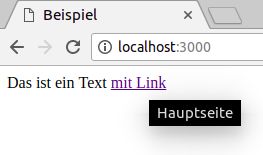
Define the translation json
```json
{
"de": {
"Example": "Beispiel",
"This is a text": "Das ist ein Text",
"with link": "mit Link"
},
"hu": {
"Example": "Példa",
"This is a text": "Ez egy szöveg",
"with link": "linkkel"
}
}
```
...or if you want use different text in base language, you can specify that...
```json
{
"en": {
"Example": "An example",
"This is a text": "This is a text",
"with link": "with link"
},
"de": {
"Example": "Beispiel",
"This is a text": "Das ist ein Text",
"with link": "mit Link"
},
"hu": {
"Example": "Példa",
"This is a text": "Ez egy szöveg",
"with link": "linkkel"
}
}
```
After that, you can use it from express
```js
const app = require('express')();
const pugI18nPostparse = require('pug-i18n-postparse');
const languageFilePath = __dirname + '/i18n.json';
app.set('view engine', 'pug');
app.set('views', __dirname); // or your views directory
app.use(pugI18nPostparse.express('en', languageFilePath)); // define the default language
app.get('/', function (req, res, next) {
res.locals.language = 'de'; // you can pass the selected language in locals
res.render('index');
});
app.listen(3000);
```
You can use your express middleware for language selection
```js
const app = require('express')();
const pugI18nPostparse = require('pug-i18n-postparse');
const languageFilePath = __dirname + '/i18n.json';
app.set('view engine', 'pug');
app.set('views', __dirname); // or your views directory
app.use(pugI18nPostparse.express('en', languageFilePath)); // define the default language
app.use(function(req,res,next){
// this is a place, where you get your user preferred language - for example from request header, or user settings
res.locals.language = 'de'; // you can pass the selected language in locals
next();
});
app.get('/', function (req, res, next) {
res.render('index');
});
app.listen(3000);
```
You can use your **own** i18n implementation:
```js
function myI18nImplementation(text, language){
// your magic here
let retValue = text.replace(/^(")?.*?(")?$/,'$1Marklar$2');
return retValue;
}
const app = require('express')();
const pugI18nPostparse = require('pug-i18n-postparse');
app.set('view engine', 'pug');
app.set('views', __dirname); // or your views directory
app.use(pugI18nPostparse.express('en', myI18nImplementation));
app.get('/', function (req, res, next) {
res.render('index');
});
app.listen(3000);
```
The result is:
```html
Marklar
Marklar Marklar
```
See the [examples](https://github.com/sarkiroka/pug-i18n-postparse/tree/master/example)
---
_Source: https://npm.io/package/pug-i18n-postparse · Machine-readable twin of the npm.io package page. Health data is recomputed on every publish._