
react-native-audio-analyzer
A powerful library designed for React Native to visualize audio tracks, extract amplitude data, and create stunning audio waveforms.
This package offers robust tools that enable developers to process audio files efficiently, obtaining amplitude arrays for in-depth analysis or creating visually appealing audio waveforms within React Native applications.
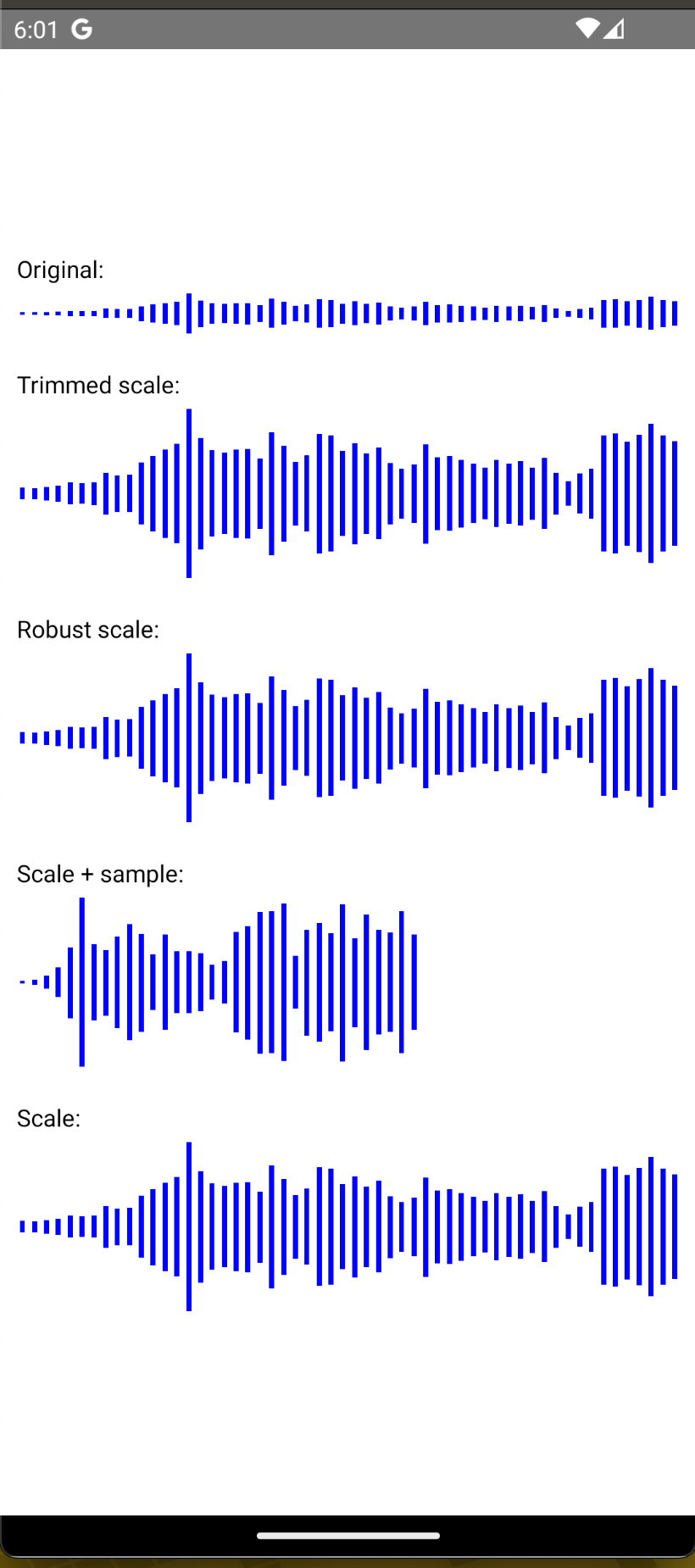
Create Stunning Audio Waveforms
With this library, unleash creativity by generating captivating audio waveforms from your audio tracks, providing an engaging visual representation of sound.
Features
- Audio Analysis: Easily analyze audio tracks to obtain amplitude data for visualization or analysis purposes
- Flexible Visualization: Visualize amplitude data in a customizable manner, allowing developers to create diverse representations based on audio characteristics, including stunning audio waveforms
- Sample and Scale Data: Utilize functions to sample and scale amplitude data, providing more granular control over visualization output
- Platform Compatibility: Compatible with both Android and iOS platforms, ensuring a consistent experience across devices
- High Performance: Built with C++ and miniaudio library for optimal performance
- TypeScript Support: Full TypeScript support with comprehensive type definitions
Installation
npm install react-native-audio-analyzer react-native-nitro-modules
# or
yarn add react-native-audio-analyzer react-native-nitro-modulesNote:
react-native-nitro-modulesis required as this library relies on Nitro Modules.
iOS Setup
cd ios && pod install
# or
bundle exec pod install
Usage
Basic Usage
import { computeAmplitude } from 'react-native-audio-analyzer';

// Analyze audio file and get amplitude data
const amplitudeData = computeAmplitude('/path/to/audio.mp3', 1000);
console.log('Amplitude data:', amplitudeData);
Creating Audio Waveforms
import React, { useCallback, useEffect, useState } from 'react';
import { View, StyleSheet, ScrollView } from 'react-native';
import { computeAmplitude } from 'react-native-audio-analyzer';

export default function AudioWaveform() {
  const [amplitudeData, setAmplitudeData] = useState<number[]>([]);

  const analyzeAudio = useCallback(async () => {
    try {
      const result = computeAmplitude(
        '/path/to/your/audio.mp3',
        1000 // Number of amplitude samples to generate
      );
      setAmplitudeData(result);
    } catch (error) {
      console.error('Error analyzing audio:', error);
    }
  }, []);

  useEffect(() => {
    analyzeAudio();
  }, [analyzeAudio]);

  return (
    <ScrollView horizontal contentContainerStyle={styles.container}>
      <View style={styles.waveform}>
        {amplitudeData.map((amplitude, index) => (
          <View
            key={index}
            style={[
              styles.bar,
              { height: 500 * amplitude } // Scale the height based on amplitude
            ]}
          />
        ))}
      </View>
    </ScrollView>
  );
}

const styles = StyleSheet.create({
  container: {
    flexGrow: 1,
  },
  waveform: {
    flex: 1,
    flexDirection: 'row',
    alignItems: 'center',
    columnGap: 1,
  },
  bar: {
    width: 3,
    backgroundColor: '#007AFF',
    borderRadius: 1,
  },
});
Advanced Usage
import { computeAmplitude } from 'react-native-audio-analyzer';

// Customize the number of amplitude samples
const highResolution = computeAmplitude('/audio.mp3', 2000); // More detailed
const lowResolution = computeAmplitude('/audio.mp3', 100);   // Less detailed

// Process the amplitude data for different visualizations
const normalizedData = highResolution.map(amplitude =>
  Math.min(amplitude * 100, 1.0) // Normalize to 0-1 range
);

// Create different visualization styles
const createWaveform = (data: number[], style: 'bars' | 'line' | 'area') => {
  switch (style) {
    case 'bars':
      return data.map((amp, i) => ({ x: i, y: amp }));
    case 'line':
      return data.map((amp, i) => ({ x: i, y: amp }));
    case 'area':
      return data.map((amp, i) => ({ x: i, y: amp, height: amp }));
  }
};
API Reference
load(url: string): Promise<string>
Load and cache audio file.
Parameters
url(string): Url to the audio file to be cached
Returns
Promise<string>: Promise with absolute file system path to cached file.
Example
const path = load('https://file-examples.com/storage/fe180a8b03688f5559b9baf/2017/11/file_example_MP3_1MG.mp3', 500);
// Returns: /data/user/0/audioanalyzer.example/cache/9349e0a758090499d982e320a10273ab.audio
computeAmplitude(filePath: string, outputSampleCount: number): number[]
Analyzes an audio file and returns an array of amplitude values.
Parameters
filePath(string): Path to the audio file to analyzeoutputSampleCount(number): Number of amplitude samples to generate
Returns
number[]: Array of amplitude values between 0 and 1
Example
const amplitudes = computeAmplitude(path, 500);
// Returns: [0.1, 0.3, 0.5, 0.2, ...] (500 values)
Supported Audio Formats
This library supports various audio formats through the miniaudio library:
- Lossy: MP3, AAC, OGG Vorbis, Opus
- Lossless: FLAC, WAV, AIFF
- Other: WMA, M4A, and more
Performance Considerations
- The library uses native C++ code for optimal performance
- Audio processing is done efficiently with minimal memory usage
- Large audio files are processed in chunks to maintain responsiveness
- Consider using appropriate
outputSampleCountvalues based on your visualization needs
Contributing
We welcome contributions! Please see our contributing guide to learn how to contribute to this repository and the development workflow.
Development Setup
# Clone the repository
git clone https://github.com/exzos28/react-native-audio-analyzer.git
cd react-native-audio-analyzer

# Install dependencies
yarn install

# Run the example app
yarn example
License
This project is licensed under the MIT License - see the LICENSE file for details.
Related Projects
- react-native-nitro-modules - The underlying native module system
- miniaudio - The audio processing library
Made with by the React Native community