
Welcome to vue-environment-sticker


Vue.js component which shows a sticker displaying current environment name (e.g. 'demo', 'stg')
You can make it easier to understand which environments you are accessing (staging? demo? production?) and reduce incidents.
Demo
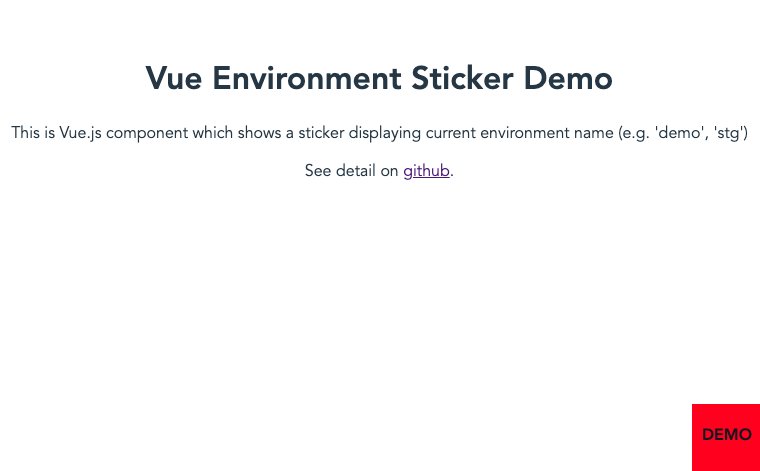
Theare are only few themes available. I'll waiting your pull requests for the new COOL themes. See HOW_TO_DEVELOP.md if you're interested in it.
Usage
with Yarn / npm
Install it.
yarn add vue-environment-sticker

# or if you use npm
# `npm install vue-environment-sticker`
Then, import and register the component.
import Vue from "vue";
import EnvironmentSticker from "vue-environment-sticker";

Vue.component("environment-sticker", EnvironmentSticker);
The component itself does not include any CSS. You'll need to include it separately:
import 'vue-environment-sticker/dist/vue-environment-sticker.css';Alternatively, you can import the scss for complete control of the component styles:
@import "vue-environment-sticker/dist/vue-environment-sticker.css";That's all!! You can use environment-sticker component like below.
<body>
  <div class="content-wrapper>
   <h1>Demo page</h1>
  </div>

  <EnvironmentSticker
      label="STAGING"
      theme="SQUARE"
  />
</body>
These are available props. (all props are optional.)
| name | type | default value | description |
|---|---|---|---|
| label | String | DEMO |
label which shows environment name |
| position | String | BOTTOM_RIGHT |
sticker position. Available values: BOTTOM_RIGHT / BOTTOM_LEFT |
| theme | String | SQUARE |
The appearance of the label. Available values: SQUARETheare are only few themes available. I'll waiting your pull requests for the new COOL themes. See HOW_TO_DEVELOP.md if you're interested in it. |
| containerStyles | Object | {} |
CSS styles for the container. This is bound as inline style. e.g. {padding: '4px'} |
| labelStyles | Object | {} |
CSS styles for the label. This is bound as inline style. e.g. {fontSize: '12px', color: 'blue'} |
via CDN (directly install in the browser)
you can install it directly in the browser through CDN.
<!-- include VueJS first -->
<!--<script src="https://unpkg.com/vue@latest"></script>-->

<!-- use the latest vue-environment-sticker release -->
<script src="https://unpkg.com/vue-environment-sticker@latest"></script>
<link rel="stylesheet" href="https://unpkg.com/vue-environment-sticker@latest/dist/vue-environment-sticker.css">

<!-- or point to a specific vue-environment-sticker release -->
<script src="https://unpkg.com/vue-environment-sticker@0.2.0"></script>
<link rel="stylesheet" href="https://unpkg.com/vue-environment-sticker@0.2.0/dist/vue-environment-sticker.css">
That's all!! You can use environment-sticker component.
See detail on with Yarn / npm Section.
Show your support
Give a ️ if this project helped you!
This README was generated with by readme-md-generator