
Byline
Byline is a web application and command-line utility for finding your published articles, blog posts, and other published work across the web. It uses Google Search results through SerpApi to create a spreadsheet with links, titles, dates, and other metadata, ready for use in Google Docs, Microsoft Excel, and other software.
Byline's command-line version can use Monolith to create offline HTML backups of your published work. You can also use the spreadsheet with other backup solutions, like ArchiveBox.
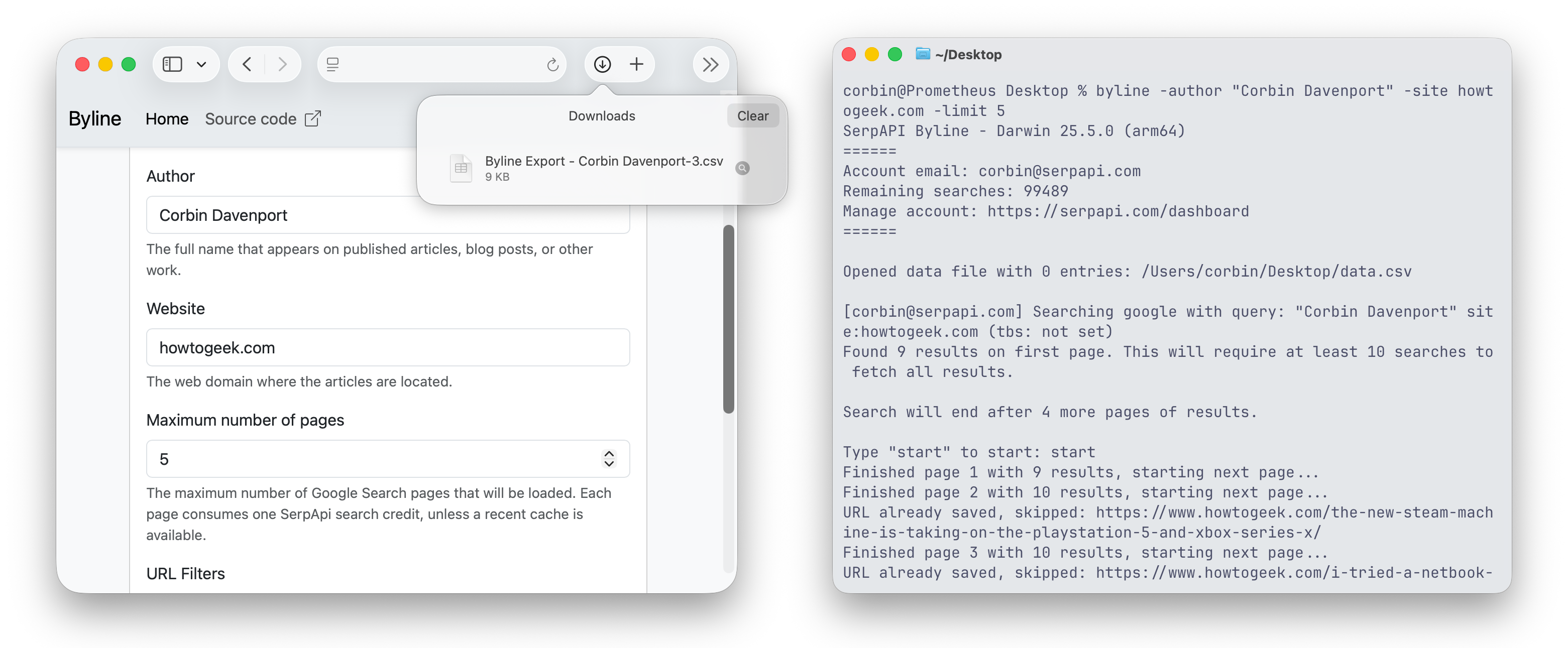
How to use the web app
Coming soon!
How to install the CLI app
Byline works on Windows, macOS, and Linux with the Node.js runtime.
Windows
Press the Win + X keyboard shortcut, and select Windows PowerShell (Admin) or Terminal (Admin). Next, copy the below command, paste it into the window (Ctrl+V), and press the Enter/Return key:
winget install -e --id OpenJS.NodeJS.LTSOpen a new PowerShell Admin window or Terminal tab, then run this command:
npm install -g serpapi-bylineYou can run byline -help to verify Byline is installed.
Linux
The process for installing Node.js and NPM varies by distribution. Here's how to do it on Ubuntu-like distros:
sudo apt install nodejs npmThen, install Byline from NPM:
npm install -g serpapi-bylineYou can run byline -help to verify Byline is installed.
macOS
Install the Homebrew package manager, then open a new Terminal window/tab and run this command to install Node.js and NPM:
brew install nodeThen, install Byline from NPM:
npm install -g serpapi-bylineYou can run byline -help to verify Byline is installed.
How to use the CLI app
You need to register for a free SerpApi account to use Byline.
First, open the Terminal or PowerShell again, and set the folder to store the spreadsheets and (optionally) article backups. You could use the Desktop folder with this command:
cd ~/DesktopNext, log in with your SerpApi account, which will save your API key to a byline-settings.txt file in your current folder:
byline -loginThen run Byline with -author and -site options to create the link list, with -limit set to 20 to use a maximum of 20 search credits:
byline -author "Corbin Davenport" -site howtogeek.com -limit 20This will create a file called data.csv in your folder containing all links. You can open and edit it in Microsoft Excel, Apple Numbers, LibreOffice, Google Docs, and other spreadsheet applications.
Run byline -help to see more options, like URL and publish date filters.
How to back up links with the CLI app
Byline needs Monolith installed to create HTML backups of links from the CSV file.
Install Monolith on Windows: Press the Win + X keyboard shortcut, and select Windows PowerShell (Admin) or Terminal (Admin), and run this command:
winget install --id=Y2Z.Monolith -eInstall Monolith on macOS: With Homebrew installed, open the Terminal application and run this command:
brew install monolithInstall Monolith on Linux: Check the Monolith README for installation options.
Next, switch to the folder containing your data.csv file and API key, like this:
cd ~/DesktopFinally, start the backup:
byline -backupFeature suggestions & bug reports
Found a bug that needs fixing? Have an idea for a feature? Check the issues page first, and if it's not there, please create a new issue!